
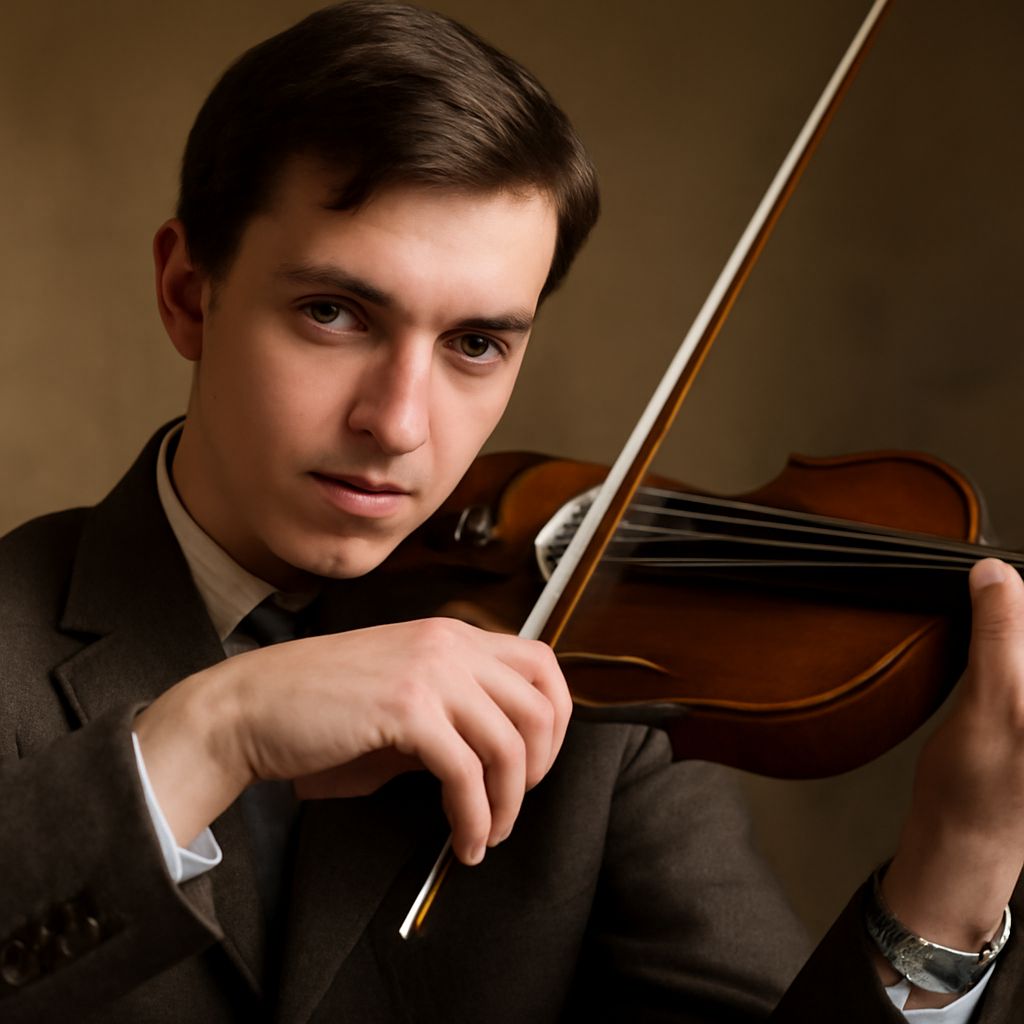
The best violinist of all time depends on what “greatest” measures. Paganini has the strongest claim for technical innovation, Heifetz for precision and control, Joachim for interpretive authority, and Perlman for modern public influence. No single player leads every category.
A fair comparison uses the same six criteria: technique, interpretation, influence, repertoire, recordings, and legacy. On that basis, Heifetz is the strongest all-round recording-era candidate, while Paganini remains the defining historical innovator.
What Can “Best Violinist of All Time” Mean? Set the Criteria First
“Greatest” can mean different kinds of achievement:
- Technique: control, intonation, speed, tone, and innovation.
- Interpretation: depth, originality, style, and emotional authority.
- Influence: impact on performers, composers, teaching, and audiences.
- Repertoire: mastery across periods, genres, and difficulty levels.
- Recordings: the quality and lasting importance of documented performances.
- Legacy: whether later violinists still study, imitate, or debate the player.
This distinction prevents a famous virtuoso from winning simply because of celebrity or a single spectacular performance.
Historic Great Violinists and Their Influence
Paganini: The benchmark for technical innovation
Niccolò Paganini transformed the public idea of violin virtuosity. His use of harmonics, rapid passagework, left-hand pizzicato, and theatrical presentation expanded what audiences believed the instrument could do. His compositions remain difficult benchmarks, although his limited recording legacy makes his sound impossible to assess directly. Paganini is therefore the clearest choice for technical innovation, not necessarily for interpretation or documented performance.
Joachim, Beethoven, and the tradition of interpretive authority
Joseph Joachim represents a different model of greatness. His performances and teaching helped establish a serious, structurally informed approach to Beethoven and Brahms. He valued architecture and fidelity over empty display, influencing generations of violinists. Because recordings of Joachim are scarce and acoustically limited, his legacy rests more on students, editions, testimony, and the interpretive tradition he shaped.
Recording-Era Candidates for the Greatest Violinist of All Time
Recording-era standards: Heifetz, Kreisler, Milstein, and Oistrakh
Jascha Heifetz brought extraordinary accuracy, speed, tonal focus, and technical economy to the recording era. His performances can sound controlled rather than spontaneous, but his command remains a standard for modern virtuosos. Fritz Kreisler offered warmth, rhythmic flexibility, and a uniquely personal voice, while Nathan Milstein combined elegance with clean, unforced technique. David Oistrakh supplied a broader, more vocal sound and exceptional authority in the major concerto repertoire. Together, they show why no single style defines greatness.
Modern reach: Menuhin, Perlman, and today’s virtuoso tradition
Yehudi Menuhin’s early recordings made him an interpretive icon, and his later teaching and humanitarian work extended his influence beyond performance. Itzhak Perlman combines a rich tone, communicative directness, technical security, and extraordinary reach through recordings, television, education, and public appearances. His influence is less about inventing new violin technique than about keeping the instrument central to modern musical culture.
How the Greatest Violinists Compare by Criterion
Technical innovation: Paganini or Heifetz
Paganini wins for expanding the instrument’s technical vocabulary. Heifetz wins for making extreme difficulty sound controlled, effortless, and musically purposeful. Choose Paganini for innovation and Heifetz for perfected execution.
Interpretive legacy: Joachim, Kreisler, or Oistrakh
Joachim leads in intellectual and historical influence, especially in Beethoven and Brahms. Kreisler leads in individuality and expressive charm. Oistrakh offers the strongest balance of warmth, scale, and structural clarity. For interpretive authority across generations, Joachim has the deepest legacy.
Modern influence: Perlman and the living tradition
Perlman is the strongest modern choice because his influence reaches concert halls, recordings, classrooms, broadcasts, and audiences unfamiliar with classical music. Menuhin had a larger educational and humanitarian footprint, but Perlman’s sustained performance career gives him the clearer claim in contemporary violin culture.
Recordings, repertoire, and lasting legacy
Heifetz is the leading choice for a consistently authoritative recorded legacy. Kreisler and Milstein offer distinctive interpretations, while Oistrakh provides breadth and humanity across the concerto repertoire. Overall, the greatest violinists divide the crown: Paganini for innovation, Heifetz for technical and recorded mastery, Joachim for interpretive legacy, and Perlman for modern influence.