
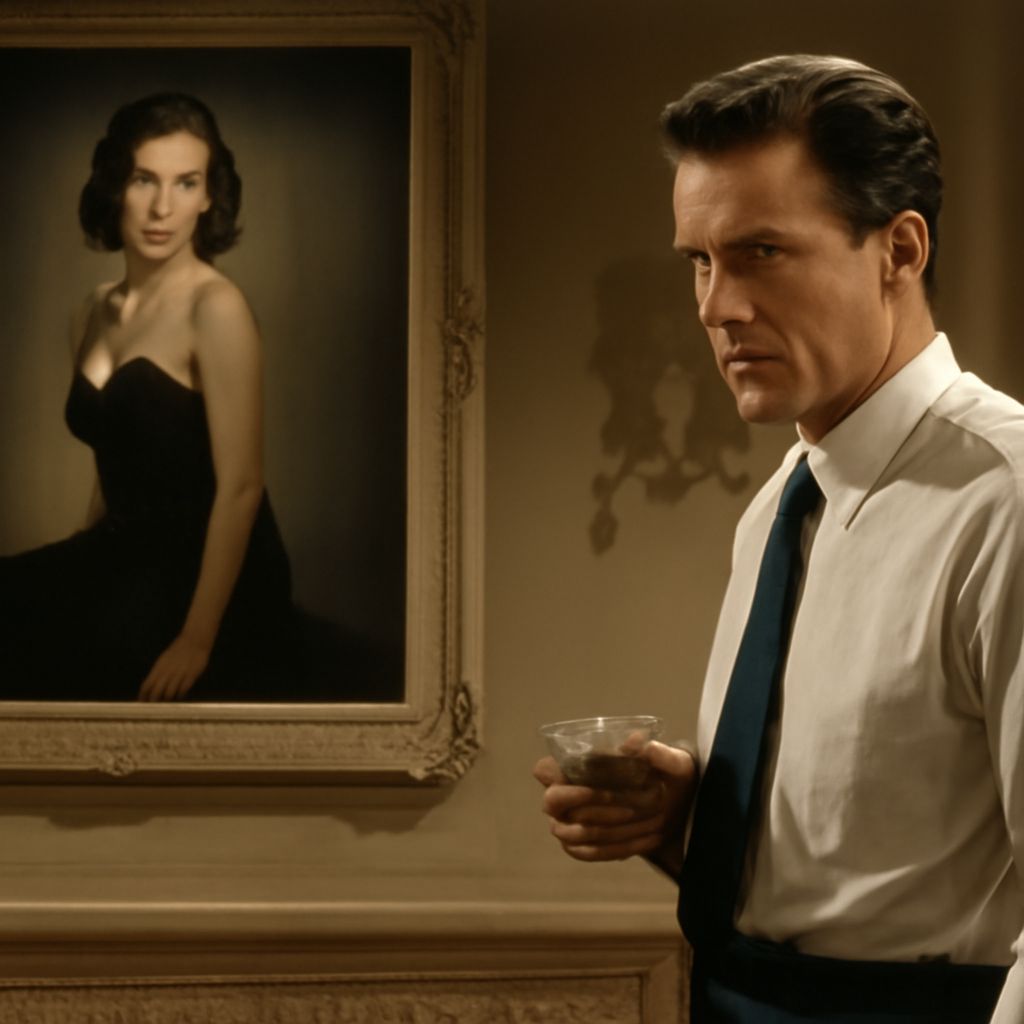
The finest films of the 1940s can take a viewer from a hectic newspaper office to a quiet railway platform, then out into the streets of postwar Rome. They share a decade, but not a single way of seeing the world.
The strongest 1940s films include brisk comedies, wartime romances and intimate stories about work and family. These six releases offer a selective route through that variety, with attention to the filmmaking choices that make each one rewarding today.
best 1940s movies: where to begin
The best 1940s movies respond to a decade of war and its aftermath in many voices. Some movies in the 1940s addressed political danger directly; others found drama in personal ambition, desire or the struggle to earn a living. The selection below moves across American, British and Italian filmmaking rather than treating Hollywood as the whole story.
His Girl Friday (1940): comedy at full speed
Howard Hawks turns a newsroom into a contest of voices. Reporter Hildy Johnson (Rosalind Russell) plans to leave journalism and marry, but her editor and ex-husband Walter Burns (Cary Grant) keeps drawing her back toward a major story.
The overlapping dialogue can be dizzying at first. That is part of the pleasure: characters fight for the next word as fiercely as they compete for a scoop. The pace also makes the relationship legible. Hildy and Walter are opponents who understand each other’s professional instincts almost too well.
Of 1940’s movies, this one is a lively introduction to screwball comedy and the sharp rhythms of studio filmmaking. Beneath the jokes lies a darker story about an impending execution and a press corps willing to exploit it. The speed keeps those tones in motion together.
Citizen Kane (1941): a life in fragments
Orson Welles plays Charles Foster Kane, a newspaper magnate whose death prompts a reporter to investigate the meaning of his final word. The film builds a portrait from accounts by people who knew him, each offering a different angle on his rise and decline.
Rather than moving neatly from childhood to old age, the story revisits the same life through several memories. Deep compositions place people and objects at different distances within the frame, making power visible in the space between them. Vast rooms can make a rich man look isolated.
Frequently named among the best movies of the 1940s, Citizen Kane rewards viewers interested in how a film tells a story as much as what happens in it. Its formal invention never eliminates the human question: how much of a person can anyone else really know?
Casablanca (1942): romance under political pressure
Michael Curtiz sets this wartime drama in a Moroccan city crowded with people seeking escape. Rick Blaine (Humphrey Bogart) runs a nightclub where his former lover Ilsa (Ingrid Bergman) reappears with her husband, resistance leader Victor Laszlo (Paul Henreid).
The romantic conflict is inseparable from the danger outside it. Papers, border controls and competing loyalties give ordinary conversations an edge. Rick’s café gathers characters from different places in one crowded room, so a personal decision can carry consequences beyond the couple at its center.
For an accessible introduction to classic films of the forties, Casablanca combines an involving story with the atmosphere of a world at war. The film shifts between the intimacy of a glance and a crowded public space.
Brief Encounter (1945): a quiet love story
David Lean’s British film, based on Noël Coward’s play Still Life, follows two married people who meet by chance at a railway station. Laura (Celia Johnson) and Alec (Trevor Howard) gradually fall in love, while the ordinary routines around them make privacy difficult.
Trains interrupt conversations and impose deadlines; a station refreshment room becomes both a refuge and a place where strangers may notice too much. Johnson’s performance and Laura’s interior narration give emotional weight to gestures that might otherwise seem almost invisible.
The most memorable films of the 1940s are not always the loudest. Brief Encounter is a fine choice for viewers who enjoy restrained performances and the tension between what people feel and what they allow themselves to say.
Bicycle Thieves (1948): a city and a stolen livelihood
Vittorio De Sica’s Italian drama follows Antonio, who needs a bicycle for a job posting bills. When it is stolen, he and his young son Bruno search Rome for it. Their journey makes a single object carry the weight of a family’s livelihood.
The film is a major example of Italian neorealism, a movement associated with attention to everyday life and the pressures facing ordinary people. Streets, crowds and workplaces give the search a social scale, but the bond between father and son keeps it personal. Bruno watches Antonio struggle, and the audience watches the boy’s understanding change.
For viewers exploring the best 40s movies beyond Hollywood, this is a direct and moving entry point. It does not need an elaborate mystery to create suspense: the question is whether a father can recover what his family needs and retain his dignity.
The Red Shoes (1948): dance becomes cinema
Michael Powell and Emeric Pressburger tell the story of Victoria Page, a young ballerina torn between her artistic career and her relationship with composer Julian Craster. Their British film treats ballet not as an interruption to the story but as one of its central forms of expression.
The extended ballet sequence transforms the stage through color, editing and imagery that can move beyond what a theater audience would see from a fixed seat. Performance becomes a way to enter the dancer’s experience. The film’s vivid design is particularly striking beside the street-level realism of Bicycle Thieves, released in the same year.
Among movies 1940s audiences encountered, these two suggest how varied the decade could be. One locates urgency in a lost bicycle; the other finds it in an artist’s work and desire.
A route through the decade
Start with His Girl Friday for comedy or Casablanca for romance and suspense. Choose Citizen Kane for narrative invention, Brief Encounter for emotional restraint, Bicycle Thieves for social drama and The Red Shoes for color and performance. Together these movies from the 40s offer several doors into a decade whose finest cinema remains too varied for a single label.