
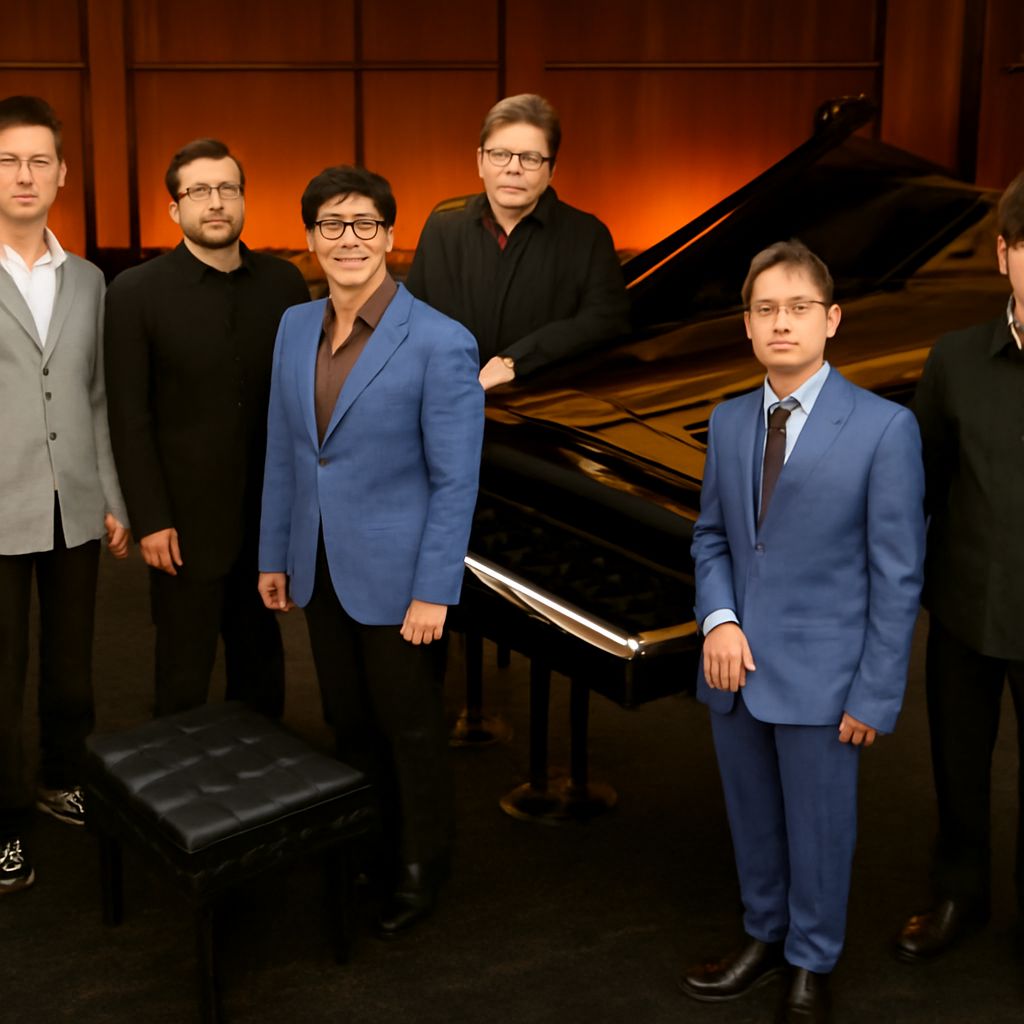
Van Cliburn stands as one of the most celebrated pianists of the twentieth century, renowned for his profound interpretations and his ability to bridge cultures through music. His illustrious career is marked by landmark performances, particularly of Beethoven and Paganini, which have become reference points for both musicians and listeners worldwide. Cliburn’s artistry not only reinvigorated the classical tradition but also played a significant role in making classical music accessible to broader audiences. His distinctive approach to these composers continues to resonate, decades after his most famous performances.
Who Was Van Cliburn?
Van Cliburn was an American classical pianist who rose to international fame after winning the inaugural International Tchaikovsky Competition in Moscow in 1958. Born in 1934 in Shreveport, Louisiana, and raised in Kilgore, Texas, Cliburn began studying piano at a young age under the guidance of his mother, herself an accomplished pianist. By his early twenties, Cliburn’s exceptional talent had already attracted significant attention in the United States, but it was his victory in the Soviet Union, during the height of the Cold War, that made him a global sensation.
Cliburn’s triumph in Moscow was more than a musical achievement—it represented a rare moment of cultural diplomacy, with audiences on both sides of the Iron Curtain captivated by his artistry. Upon his return, Cliburn received a ticker-tape parade in New York City, a rare honor for a classical musician. Throughout his career, he performed with major orchestras and recorded extensively, becoming synonymous with a golden era of American classical music.
Despite his fame, Van Cliburn was known for his humility and dedication to his craft. He continued to influence generations of pianists not just through his performances, but also by nurturing young talent through the Van Cliburn International Piano Competition, established in his honor in 1962.
Van Cliburn’s Approach to Beethoven’s Works
Van Cliburn’s interpretation of Beethoven’s repertoire revealed both technical brilliance and profound emotional depth. His recordings and live performances of iconic pieces—such as the “Emperor” Concerto (Piano Concerto No. 5 in E-flat major, Op. 73) and the “Pathétique” and “Appassionata” Sonatas—displayed his gift for balancing structural clarity with expressive nuance. Critics and audiences alike praised his ability to convey Beethoven’s dramatic contrasts, singing melodic lines, and sense of grandeur.
One of Cliburn’s trademarks was his lyrical touch, which brought out the poetry in Beethoven’s slow movements without sacrificing momentum in the faster passages. He approached Beethoven not as a remote monument of the past but as a living, breathing composer whose music could speak directly to contemporary listeners. Cliburn’s Beethoven performances were grounded in careful study, but he always left room for spontaneous expression, creating the sense that each performance was both authentic and uniquely his own.
His approach influenced the way American audiences perceived Beethoven: no longer as intimidatingly intellectual, but as passionate, human, and immediate. Many pianists cite Cliburn’s recordings as formative in shaping their own engagement with Beethoven’s music, particularly his emphasis on clarity of phrasing and architectural coherence within large-scale works.
Van Cliburn and the Influence of Paganini
Though best known for his interpretations of Romantic and Classical composers, Van Cliburn’s connection to Paganini is most evident in the way he embodied the virtuoso tradition. Niccolò Paganini, the legendary Italian violinist and composer, became a symbol of technical wizardry and expressive playing—a legacy that deeply influenced the expectations placed on pianists in the Romantic era and beyond.
Cliburn’s repertoire included works that echoed the virtuosic spirit of Paganini, such as Liszt’s “La Campanella,” which itself is based on a theme by Paganini. In these pieces, Cliburn demonstrated a command of extraordinary technical challenges—rapid passagework, shimmering trills, and fleet-fingered scales—while never losing sight of musical substance. The Paganini ideal, where technical mastery serves expressive ends, is a hallmark of Cliburn’s artistry.
Moreover, Cliburn’s stage presence and rapport with audiences also reflected the Paganini tradition. He combined charisma with a sense of genuine communication, turning each performance into something both dazzling and deeply personal. This capacity to blend virtuosity with accessibility enriched his interpretations of a wide variety of repertoire, establishing him as a true heir to the Paganini spirit in the world of piano.
The Enduring Impact of Van Cliburn’s Performances
Van Cliburn’s legacy extends far beyond his award-winning recordings and celebrated concerts. His interpretations of Beethoven and his embodiment of the Paganini tradition set new standards for technical excellence and expressive communication in classical music. Cliburn made these works approachable and relevant, inspiring both audiences and fellow musicians to listen and perform with fresh ears and open hearts.
Cliburn’s influence persists through the Van Cliburn International Piano Competition, which continues to launch the careers of young pianists and foster musical exchange on a global scale. His recordings remain benchmarks for aspiring artists, and his advocacy for music education has left a lasting imprint on the classical community. Through his artistry, humility, and vision, Van Cliburn ensured that the music of Beethoven, Paganini, and the wider classical canon would remain a vital and living tradition for generations to come.
Van Cliburn’s performances, shaped by his unique connection to Beethoven and the influence of Paganini, continue to inspire musicians and listeners alike, cementing his status as a transformative figure in the world of classical music.