
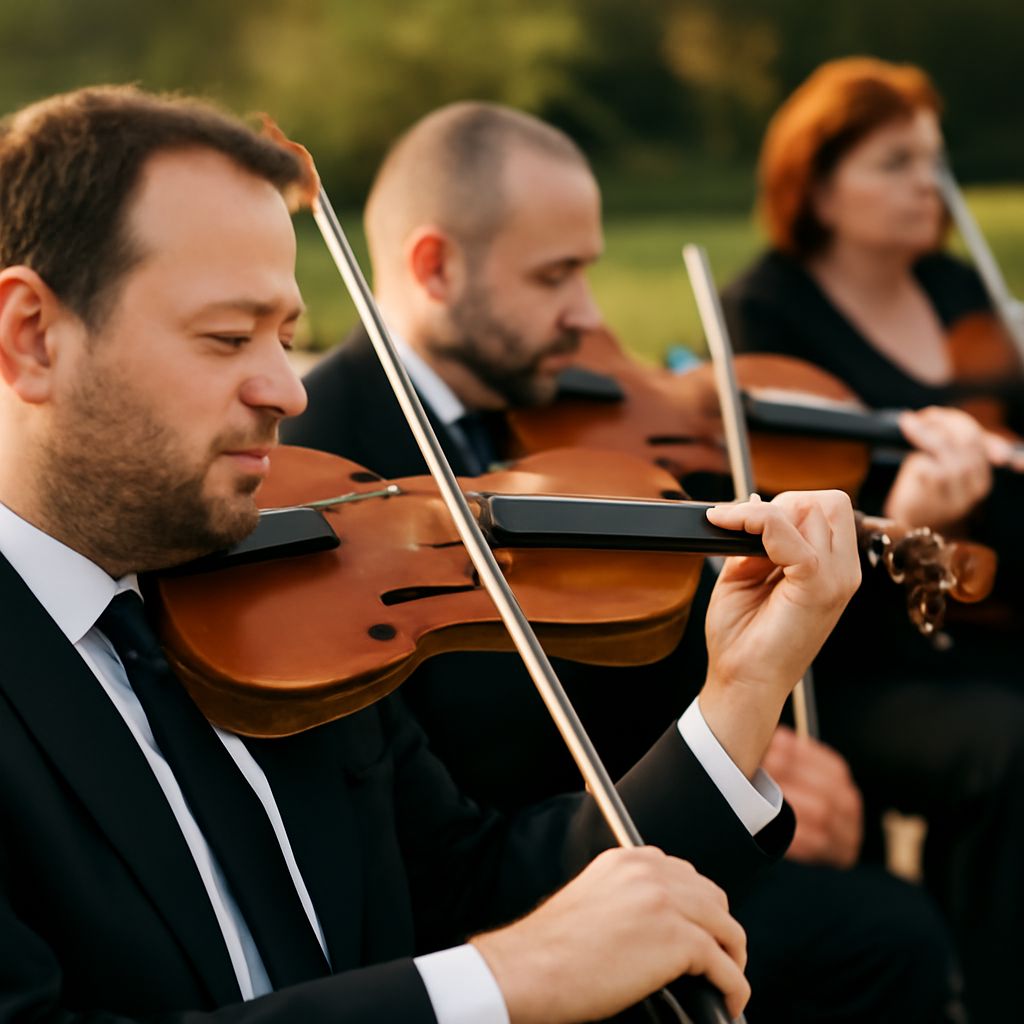
The string quartet stands as one of the most revered chamber music ensembles in classical music, defined by its unique instrumentation and rich history of innovation. Two of the most influential figures in its development, Ludwig van Beethoven and Niccolò Paganini, each left a distinct mark on the genre, shaping its expressive possibilities and technical demands. Their contributions still define how musicians and audiences experience the string quartet today.
What Is a String Quartet?
A string quartet is a chamber music group comprised of four string players: two violins (first and second), one viola, and one cello. This ensemble format also refers to the musical compositions written for these instruments. The typical structure of a string quartet composition consists of four movements, often organized as fast–slow–minuet or scherzo–fast. The interplay among the instruments allows for intricate conversations and emotional depth, making the string quartet a favorite among composers and listeners alike.
Unlike orchestral works, the string quartet offers intimacy and clarity, enabling each instrument’s voice to be heard distinctly. The first violin frequently carries the melodic line, but composers often distribute themes and countermelodies among all players, creating a dynamic balance. The format emerged during the Classical period, with Joseph Haydn widely credited as its “father,” but it would be Beethoven and Paganini who pushed its boundaries further in the 19th century.
Beethoven’s Revolutionary Approach to the String Quartet
Beethoven’s string quartets transformed the genre from its Classical roots into a vehicle for bold artistic expression. His 16 string quartets, composed over his lifetime, are typically grouped into three periods: early, middle, and late. Each phase showcases Beethoven’s evolving style and the increasing complexity of his musical language.
In the early quartets (Op. 18), Beethoven established himself as a master of form and dialogue, following but subtly expanding Haydn’s model. The middle quartets, including the three “Rasumovsky” quartets (Op. 59), are marked by unprecedented scale and dramatic contrasts. Here, Beethoven deepened the emotional landscape, integrating folk motifs and exploring new textures. The late quartets (Op. 127, 130, 131, 132, 135, and the Grosse Fuge Op. 133) are considered some of the most profound works in Western music, characterized by structural innovations, unexpected modulations, and spiritual depth.
Beethoven’s influence on the string quartet is seen in his use of thematic development, motivic unity, and emotional intensity. His quartets demand technical mastery and interpretive insight, challenging performers while offering listeners a journey through struggle, triumph, and transcendence.
Paganini’s Influence on String Quartet Music
Niccolò Paganini, renowned for his virtuosity as a violinist, also played a pivotal role in the evolution of string quartet writing. While he is best known for his compositions for solo violin, Paganini’s impact on chamber music came through his technical innovations, which expanded the expressive palette of string instruments.
Paganini’s quartets and chamber works, including his 15 string quartets, often placed the violin at the fore, treating it as a soloistic voice within the ensemble. He utilized advanced techniques such as left-hand pizzicato, rapid runs, and extreme harmonics, demanding a new level of skill from violinists. This virtuosic approach influenced not only his contemporaries but also later composers, who began to explore greater technical possibilities within the string quartet format.
Furthermore, Paganini’s collaborations with other leading musicians of his time helped popularize the string quartet and inspire composers to write for the ensemble in new ways. His flair for showmanship brought wider public attention to chamber music, bridging classical traditions with emerging Romantic sensibilities.
Essential String Quartets by Beethoven and Paganini
Beethoven’s string quartets are cornerstones of the repertoire. Among his essential works are:
- String Quartet No. 7 in F major, Op. 59 No. 1 “Razumovsky”: Noted for its expansive structure and Russian themes, this quartet exemplifies Beethoven’s middle period inventiveness.
- String Quartet No. 14 in C-sharp minor, Op. 131: This late quartet is renowned for its seamless seven-movement structure and emotional profundity, often cited as Beethoven’s own favorite.
- String Quartet No. 13 in B-flat major, Op. 130 & Grosse Fuge, Op. 133: The complex original finale, the Grosse Fuge, stands as a testament to Beethoven’s innovative spirit and remains a challenge for modern ensembles.
Paganini’s contributions, though less widely performed today, are significant for their technical demands and their reflection of his violinistic brilliance. Notable examples include:
- String Quartet No. 1 in E-flat major, MS 19: Showcases the virtuosity and lyrical qualities of the first violin, with lively Italianate melodies.
- String Quartet No. 6 in D minor, MS 33: Features intricate interplay among the instruments and displays Paganini’s innovative use of violin technique within the quartet setting.
Both composers’ works are mainstays of the string quartet literature, offering musicians and audiences a rich array of styles, techniques, and emotional journeys that continue to set the standard for the genre.