
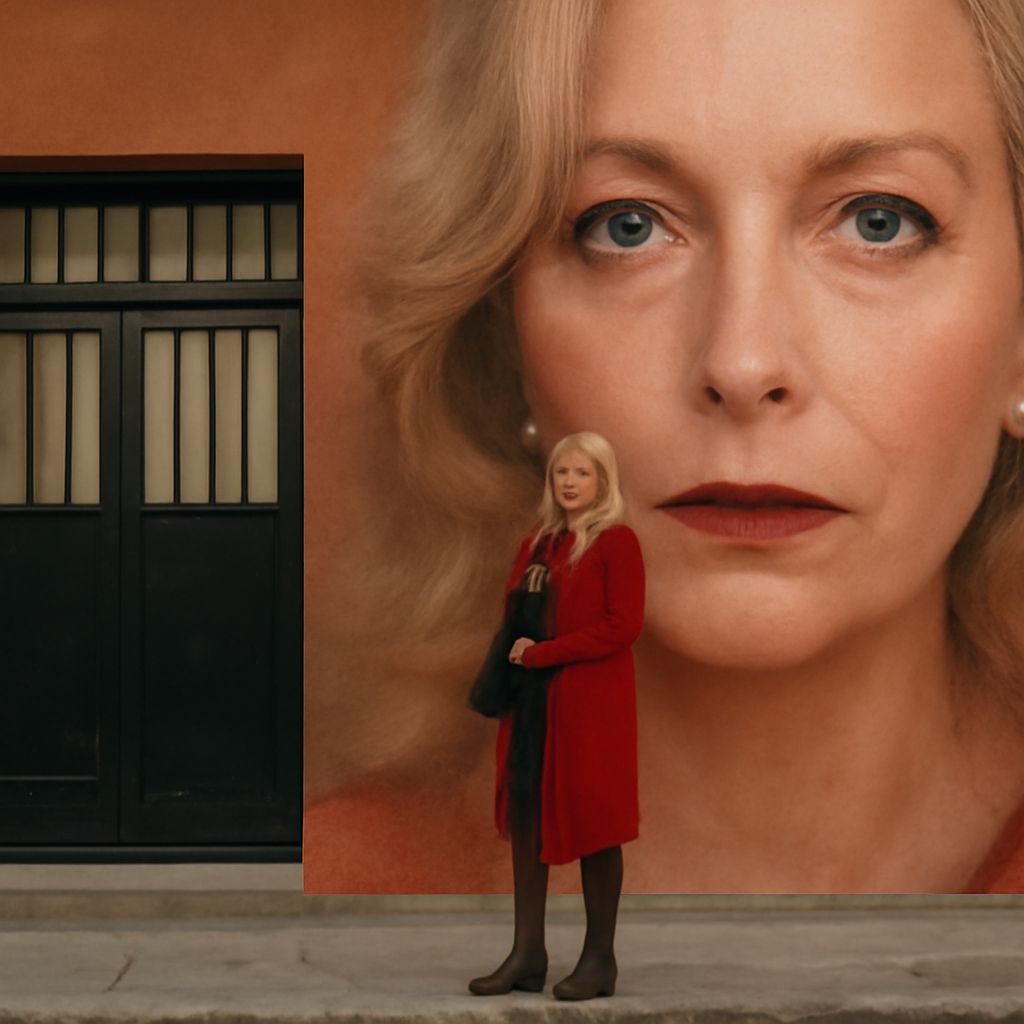
A ringing telephone, a red room, a woman on the verge of a decision: the cinema of Pedro Almodóvar makes private feelings visible. His screen stories move between farce and grief, often within the same scene. This guide traces the director’s feature work and suggests where different viewers might begin.
Pedro Almodovar movies in chronological order
The following chronology of Pedro Almodovar movies covers narrative features directed by him through September 20, 2026. Years identify the films, not a uniform US release schedule. Shorts are discussed separately, as are productions he did not direct. Rotten Tomatoes’ filmography identifies directing and other credits; its current ratings are not used here.
The early years: 1980–1989
- 1980 — Pepi, Luci, Bom and Other Girls Like Mom. The debut’s irreverent friendships announce a filmmaker interested in people living outside respectable norms.
- 1982 — Labyrinth of Passion. A pop comedy turns desire and mistaken identities into a crowded, restless city portrait.
- 1983 — Dark Habits. A singer finds shelter among nuns in a convent that is anything but conventional.
- *1984 — What Have I Done to Deserve This?.* Domestic pressure and comic exaggeration meet in the story of an overworked Madrid housewife.
- 1986 — Matador. Desire and violence converge in a darker investigation of obsession.
- 1987 — Law of Desire. A filmmaker’s relationships bring performance, jealousy, and self-invention into sharp focus.
- 1988 — Women on the Verge of a Nervous Breakdown. A breakup becomes a brilliantly orchestrated ensemble farce centered on Carmen Maura’s Pepa.
- *1989 — Tie Me Up! Tie Me Down!.* A troubling captive relationship is staged through the volatile conventions of romantic comedy and melodrama.
This run makes the director’s early features rewarding to watch together: the rough energy of the debut gradually becomes the precise timing of Women on the Verge. An apartment can become a stage, and a telephone call can change the direction of an entire story.
Expanding the melodrama: 1991–2009
- 1991 — High Heels. A singer’s return complicates a mother-daughter relationship already shaped by performance and resentment.
- 1993 — Kika. Comedy and violence collide in a story that also looks at the spectacle of television.
- 1995 — The Flower of My Secret. A romance novelist faces a personal crisis that her professional formulas cannot resolve.
- 1997 — Live Flesh. A shooting links the lives of several people across years of desire, guilt, and consequence.
- 1999 — All About My Mother. A grieving mother, played by Cecilia Roth, builds connections with a group of women in Barcelona.
- 2002 — Talk to Her. Two men caring for women in comas confront questions of intimacy, communication, and consent.
- 2004 — Bad Education. A director receives a story tied to his childhood, opening a puzzle of identity and abuse.
- 2006 — Volver. Penélope Cruz plays Raimunda, whose family must confront death and secrets across generations.
- 2009 — Broken Embraces. A blind screenwriter revisits the making of a film and the love affair that shaped it.
Among the richest pictures in Almodóvar’s filmography, All About My Mother connects theatrical performance with chosen family. Its dramatic coincidences matter because they bring strangers into positions of care. Talk to Her uses a quieter structure, but its central acts remain ethically disturbing. The beauty of an image does not settle the question of what a character has done.
Memory and reinvention: 2011–2026
- 2011 — The Skin I Live In. A surgeon’s experiment becomes a psychological thriller about power over another person’s body.
- *2013 — I’m So Excited!.* An airline emergency becomes the setting for an ensemble comedy.
- 2016 — Julieta. A mother revisits the events surrounding her estrangement from her daughter.
- 2019 — Pain and Glory. Antonio Banderas plays a filmmaker whose memories return as he faces pain and creative uncertainty.
- 2021 — Parallel Mothers. Two women who meet in a maternity ward become linked to each other and to a larger history of loss.
- 2024 — The Room Next Door. Julianne Moore and Tilda Swinton play old friends brought together by illness and a difficult decision.
- 2026 — Bitter Christmas. A woman’s loss and a filmmaker’s writing unfold in parallel. The film had its world premiere at Cannes in May 2026, as reported by Movistar Plus.
These later works by Pedro Almodóvar revisit memory without treating it as a transparent record. In Pain and Glory, a remembered childhood and a present-day encounter illuminate each other; neither is merely a key that unlocks the other. Parallel Mothers joins intimate questions about parenthood to the recovery of Spain’s buried past.
What makes the style recognizable?
Color in Almodóvar films is rarely just decoration. Red walls, patterned clothing, and carefully arranged interiors give emotional tensions a physical setting. Yet the images need not tell the audience exactly what to feel. A bright kitchen can frame fear as readily as joy, and a composed shot can hold a character who is losing control.
Performance is equally central to the director’s cinema. Maura’s restless physical timing makes the crowded apartment in Women on the Verge feel like an extension of Pepa’s anxiety. In Volver, Cruz gives Raimunda’s practical determination weight even as the story takes a turn toward the uncanny. Banderas plays creative exhaustion in Pain and Glory with a contrasting stillness.
The filmmaker’s stories also move easily between genres. A thriller may contain a family melodrama; a comedy may reveal the loneliness beneath a joke. Those shifts can be unsettling, especially when a film asks viewers to notice a character’s charm and the harm that character causes. That tension is part of the work, not a cue to dismiss it.
Adaptation, shorts, and other credits
Several screen works by Pedro Almodóvar begin with literature but reshape their source material. Julieta draws on three Alice Munro stories, bringing them into a Spanish setting. Research published in Fotocinema identifies those stories and discusses the director’s adaptations. In The Room Next Door, the filmmaker adapts Sigrid Nunez’s novel What Are You Going Through; the Venice Film Festival’s credits also identify the film as his first English-language feature.
A directing filmography is narrower than a list of every project carrying his name. He directed the shorts The Human Voice (2020) and Strange Way of Life (2023), useful companions to the features but omitted from the chronology above. He is credited as a producer on Wild Tales (2014), directed by Damián Szifron. The distinction helps viewers follow his work without assigning him another director’s film.
Where to begin
There is no objective list of the best Almodovar movies, but several entry points reveal different strengths. For comic precision and an accessible ensemble, start with Women on the Verge of a Nervous Breakdown. For emotionally generous melodrama and a network of women’s relationships, choose All About My Mother. Both are among his most compelling films for a first viewing, though their rhythms are very different.
For a family story that mingles everyday labor with secrets, try Volver. Viewers drawn to memory and artistic self-examination may prefer Pain and Glory, while those interested in adaptation and restrained performances can begin with The Room Next Door. For a darker challenge, The Skin I Live In shows how this director can turn questions of identity into a thriller. Each choice opens a different door into a body of work that rewards a second look.