
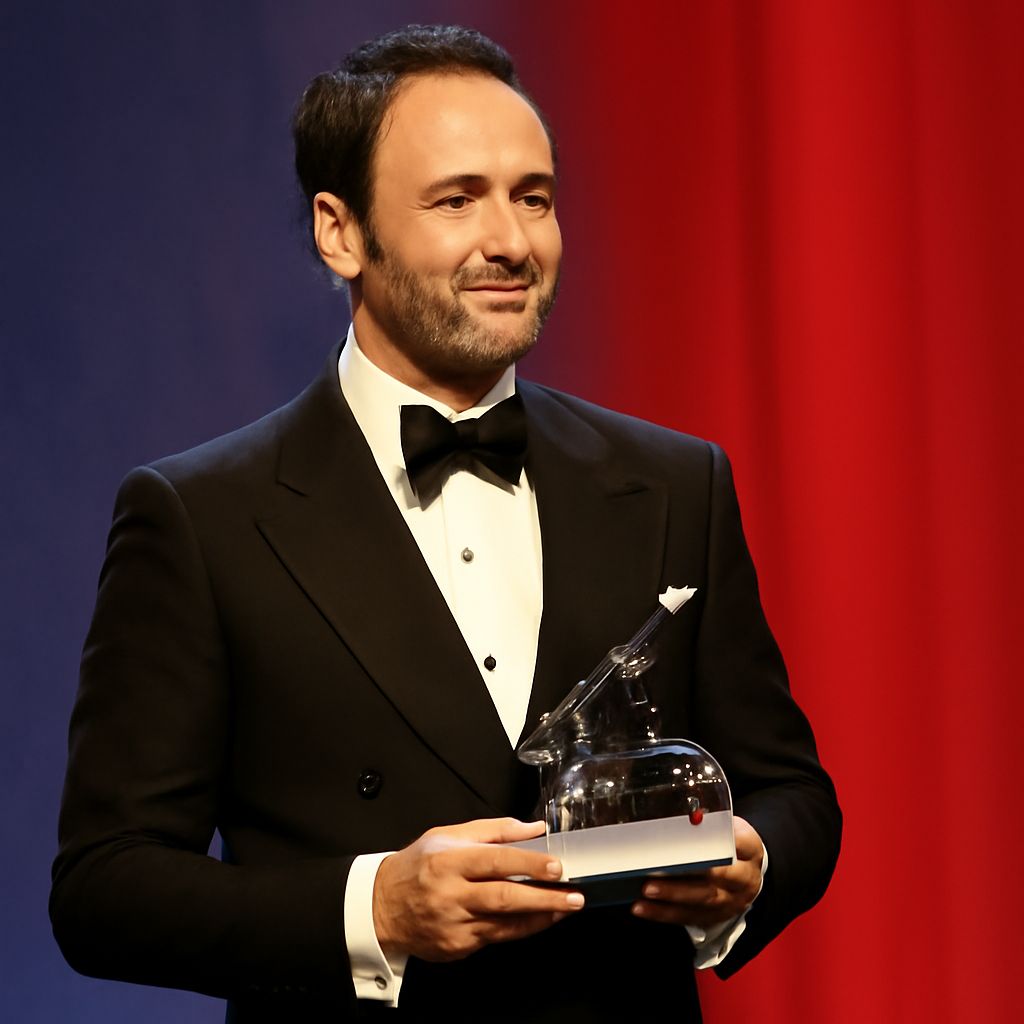
A man knots his tie with the care of someone preparing for an ordinary day. In A Single Man, that routine conceals a devastating loss. The movies directed by Tom Ford invite attention to such surfaces: a room, a face, a carefully chosen object can carry emotion that a character struggles to express. The films directed by Tom Ford also ask what happens when a polished life can no longer contain that emotion.
Tom Ford Films in Order
The released features begin with A Single Man (2009), a drama about a grieving professor, and continue with Nocturnal Animals (2016), a thriller that turns a manuscript into a second world on screen. Both are adaptations, and both make private pain visible through precise visual choices. The two Tom Ford movies use very different narrative tempos: one follows a day of encounters, while the other moves among a present, a remembered relationship, and a violent fiction.
A third feature, Cry to Heaven, adapts Anne Rice’s novel. The Italian national film portal, checked November 4, 2026, lists Ford as director and a 2026 shoot; AP reports that he is also writing and producing the adaptation. The two released features provide the material for comparison here.
A Single Man: Grief in the Details
Colin Firth plays George Falconer, a British professor in 1962 Los Angeles who is mourning his partner Jim. George moves through a day of teaching, errands, and conversations while contemplating suicide. His friend Charley, played by Julianne Moore, offers companionship, though her hopes and his grief do not quite meet. A student, Kenny, draws him into a different kind of exchange, one that briefly opens the tightly ordered world around him.
The American Film Institute catalog identifies the film as Ford’s directing debut, adapted from Christopher Isherwood’s novel, with Ford and David Scearce sharing screenplay credit. Tom Ford, as a film director, turns the novel’s intimate attention to George into a cinematic form: close views of objects and faces make the ordinary world feel unusually charged. In this Tom Ford movie, watch how an encounter can change the warmth of the image, or how a close-up holds a glance just long enough to make it matter.
Firth’s performance gives that design its center. George’s control is visible in his posture and measured speech, but a pause or a small shift in expression reveals how hard maintaining it can be. The editing lets present experience and memories of Jim touch without turning the day into a simple sequence of explanations. Among movies made by Tom Ford, this one offers the most concentrated portrait of grief as a daily physical experience.
Nocturnal Animals: A Story Inside a Story
In the second of the Tom Ford films, Amy Adams plays Susan Morrow, a Los Angeles art dealer who receives a novel manuscript from her former husband Edward, played by Jake Gyllenhaal. As Susan reads, the film gives the manuscript its own screen life: Gyllenhaal also plays Tony, a family man whose journey through West Texas becomes a nightmare. Memories of Susan and Edward’s marriage form a third strand.
Focus Features credits Ford as director and names him and Austin Wright as writers; the film adapts Wright’s novel Tony and Susan. In this film by Tom Ford, the book within the film is fictional, but Susan’s response to it is the engine of the drama. The cuts between her reading and Tony’s ordeal make the question of what Edward wants her to feel as compelling as the thriller’s immediate danger.
Adams often works through stillness: Susan’s face becomes a screen on which shock, recognition, and unease register. In the manuscript’s world, Gyllenhaal’s vulnerability meets Aaron Taylor-Johnson’s threatening volatility and Michael Shannon’s dry, hard-edged detective. As a Tom Ford film, it depends on contrasts in performance. These performances give the nested story a force of its own, even as its images invite comparison with Susan’s past.
How Form Shapes Feeling
Director Tom Ford treats interiors as emotional environments. In Tom Ford’s movie about George, the home holds traces of shared life; Susan’s art world surrounds her with expensive surfaces and a sense of isolation. Across the Tom Ford films, visual polish can be pleasurable to look at while also exposing a character’s distance from other people. In each film by Tom Ford, a beautiful frame may sharpen the loneliness within it.
The editing is equally expressive. The first film moves between a present day and memories that interrupt it; the second switches among narrative levels, allowing a fictional act of violence to echo a real relationship. These films from Tom Ford reward attention to the moment of transition: what was on a character’s mind just before the cut, and what new image answers it?
The contrast between these movies by Tom Ford also matters. A Single Man stays close to George’s experience, with suspense arising from how he will move through the day. Nocturnal Animals creates suspense through the manuscript and through Susan’s effort to interpret its connection to her own history. Tom Ford movies are united by their interest in longing, but their different structures make that feeling work on the viewer in distinct ways. A movie from Tom Ford can hold the viewer inside a quiet encounter or propel the viewer into a dangerous imagined landscape.
For a first encounter with Tom Ford’s movies, choose A Single Man for an intimate study of grief; choose Nocturnal Animals for a darker, more violent puzzle about memory and revenge.