
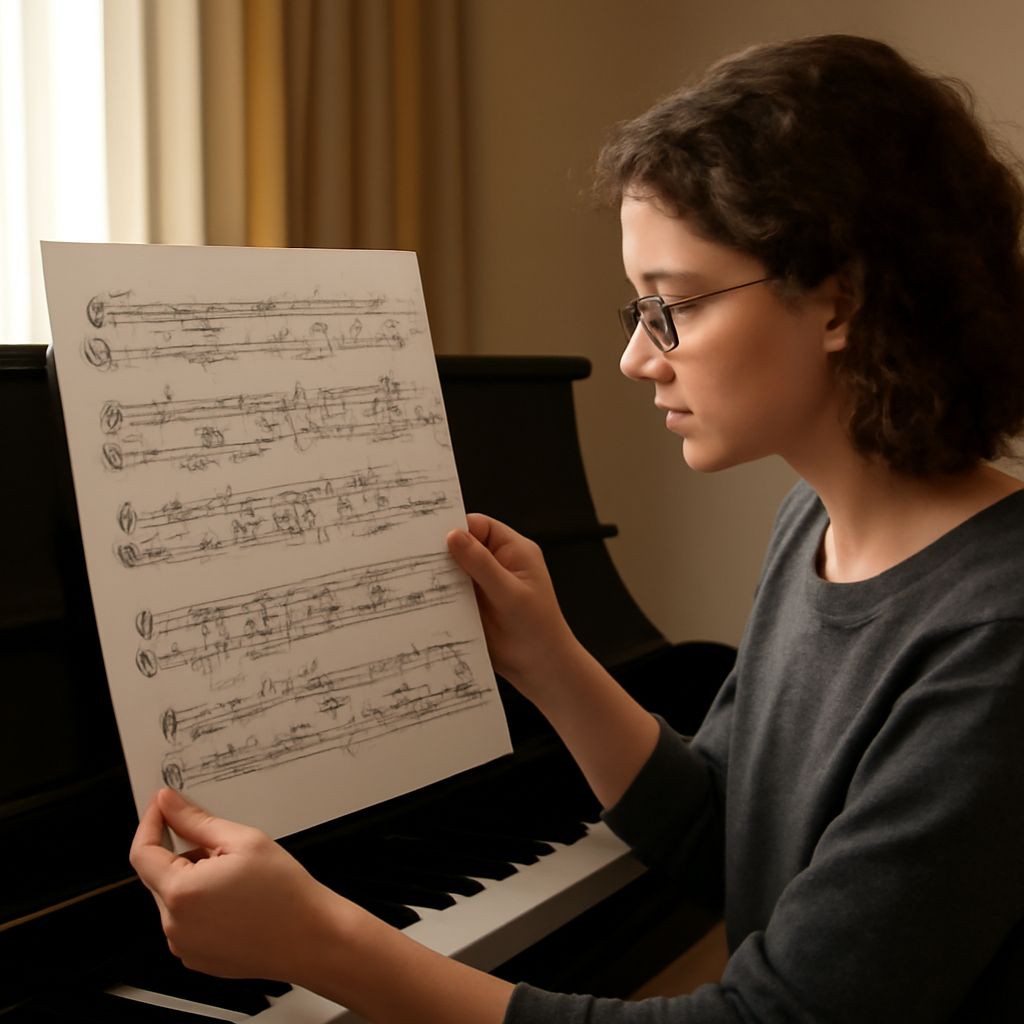
For pianists seeking to challenge themselves, diving into the hardest piano songs can be both a rewarding and daunting experience. The mastery of such pieces requires immense technical skill, emotional depth, and an unwavering commitment to practice. These compositions are not just tests of ability, but also of artistry, demanding a deep understanding of music beyond the notes. In this exploration, we will look at some of the hardest piano pieces, with a special focus on works by Beethoven and Paganini.
Understanding the Complexity of Piano Pieces
The complexity of a piano piece can arise from various factors, including technical demands, emotional expression, and structural intricacies. Technically, difficulty is often found in rapid passages, wide leaps, intricate finger work, and challenging hand coordination. Emotionally, a piece may require the pianist to convey deep feelings, adding layers of interpretation that go beyond mere technique. Structurally, complex compositions may involve unconventional forms, making them difficult to memorize and execute.
Beethoven’s Most Challenging Works
Ludwig van Beethoven, a towering figure in classical music, has composed some of the hardest piano songs known to musicians. One of his most notoriously difficult pieces is the “Hammerklavier” Sonata, Op. 106. This composition is famous for its length, complexity, and technical demands, featuring fast octaves, intricate hand crossings, and a fugue that challenges even the most skilled pianists.
Another Beethoven work that tests pianists is the “Appassionata” Sonata, Op. 57. Known for its intense emotional range, the piece requires the performer to navigate rapid tempo changes, dynamic contrasts, and powerful chordal passages. Both of these works exemplify Beethoven’s ability to push the boundaries of piano music, making them staples in the repertoire of advanced pianists.
Paganini’s Infamous Piano Compositions
While Niccolò Paganini is best known for his violin compositions, his influence extends to some of the hardest piano pieces through transcriptions and variations. Franz Liszt, inspired by Paganini’s violin works, created the “Grande Etudes de Paganini,” a set of six pieces that are considered some of the most technically demanding works in the piano repertoire.
The “La Campanella” from this set is particularly infamous due to its rapid leaps, fast arpeggios, and intricate hand crossings. The piece requires a high degree of dexterity and precision, making it a formidable challenge for any pianist. Similarly, Liszt’s “Etude No. 6,” based on Paganini’s “Caprice No. 24,” is another work that demands exceptional technical skill, featuring fast scales, leaps, and octave passages.
Why These Pieces Are Considered the Hardest
The hardest piano pieces, such as those by Beethoven and Paganini, are regarded as such due to their combination of technical difficulty, emotional depth, and structural complexity. These compositions often require pianists to have advanced technical skills, including the ability to execute rapid passages, manage wide dynamic ranges, and maintain control over complex polyphonic textures.
Furthermore, the emotional demands of these pieces require a level of maturity and understanding that goes beyond technical prowess. Pianists must interpret the nuances of the music, bringing out the composer’s intended emotional expressions while maintaining technical accuracy.
In summary, tackling the hardest piano songs is a formidable undertaking that challenges both the technical and interpretative abilities of a pianist. Whether it is the monumental works of Beethoven or the technically dazzling transcriptions of Paganini, these pieces continue to inspire and test pianists worldwide, serving as benchmarks for mastery in the art of piano playing.