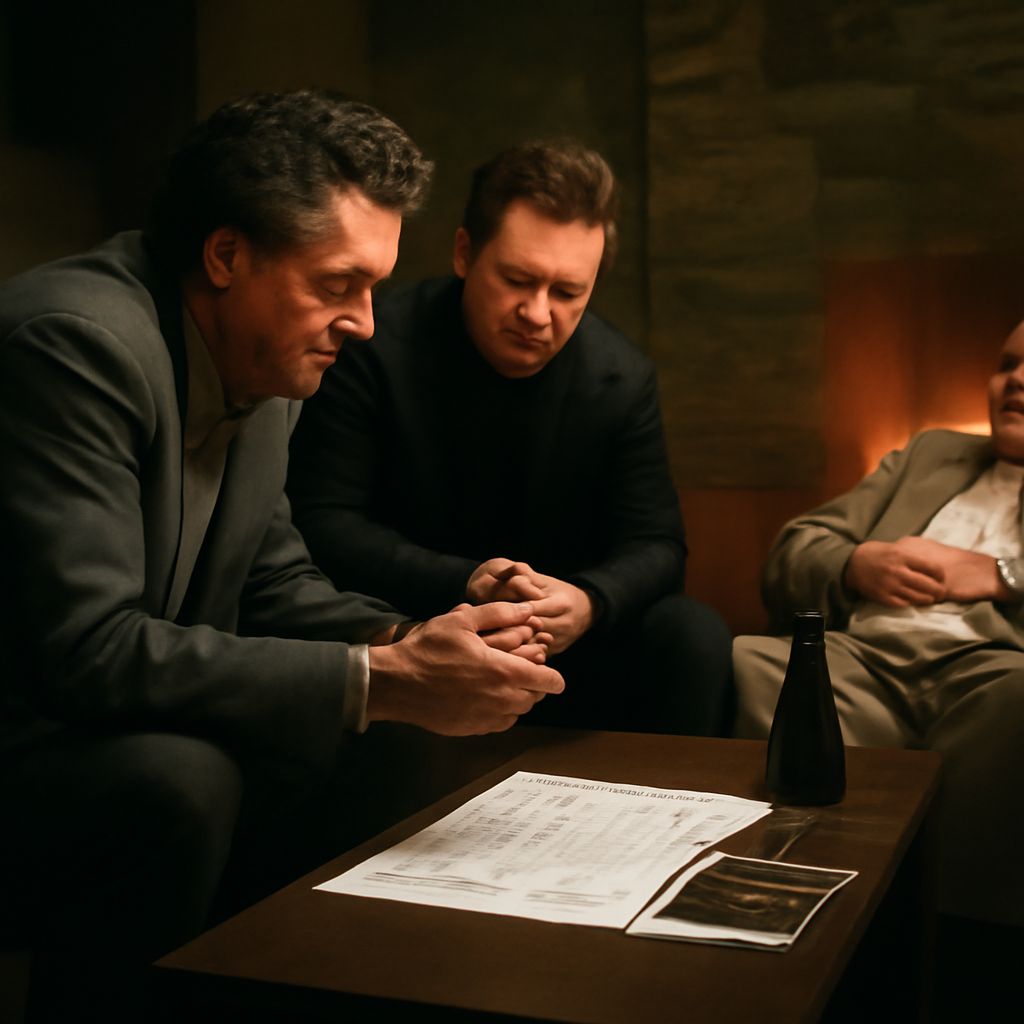
A safecracker studies a fortified room while the person meant to help him may be the least predictable part of the plan. That tension drives The Score (2001), Frank Oz’s crime thriller starring Robert De Niro and Edward Norton. Its robbery depends on precise technical work, but its suspense comes just as much from two men trying to judge what the other will do.
Edward Norton, Robert De Niro, and a Dangerous Partnership
De Niro plays Nick Wells, an experienced thief who runs a Montreal jazz club and wants to leave crime behind. Norton plays Jack Teller, a younger thief with access to a valuable French scepter held in the city’s customs house. Marlon Brando is Max, the intermediary who brings them together; Angela Bassett plays Diane, Nick’s partner. Paramount’s film page confirms the cast, director, and 2001 release, distinguishing this movie from other works titled The Score.
The movie The Score begins with Nick’s wish for a different life already in view. The jazz club offers a legitimate business and a place where the music can go on without him breaking into another building. Diane wants a future with him, but his habit of taking risks keeps that future uncertain. Max’s proposal promises a large payoff while asking Nick to abandon the caution that has kept him in business.
Edward Norton, Robert De Niro, and Marlon Brando give the deal three distinct rhythms. Brando’s Max presses and persuades; De Niro’s Nick listens, weighs, and resists; Norton’s Jack arrives with the restless energy of someone eager to prove himself. The difference in tempo becomes part of the plot. An agreement to work together does not erase the reasons for suspicion.
The Job: Experience Meets Access
Jack can get close to the target because he works inside the customs house under an assumed identity, Brian. His performance encourages the people around him to underestimate him. When Nick meets him, Jack’s abrupt shift away from that persona demonstrates both his usefulness and his appetite for showing what he can do. Roger Ebert’s review notes how the demonstration unsettles Nick.
Norton and De Niro’s characters face a practical imbalance. Jack knows the building from the inside; Nick has the safecracking skill needed to reach the prize. Neither can simply replace the other. Their cooperation must survive conflicting styles as well as the security system, and every piece of shared information gives one man an opportunity to mislead the other.
That setup is familiar to heist cinema, but Oz makes the details matter. Plans involve routines, physical barriers, and people whose ordinary work continues around the conspirators. The 2001 thriller The Score asks the audience to learn the shape of the problem before the robbery begins. A locked space is more suspenseful when its entrances, alarms, and timing have become intelligible.
Performance as a Form of Disguise
Jack’s alias is central to what The Score explores about performance. As Brian, he presents himself as a janitor with an intellectual disability; the disguise exploits other people’s assumptions about him. Norton changes his voice, posture, and manner between that role and Jack’s confident private behavior. The transformation gives Nick a reason to admire his access while questioning how much of any encounter with him is genuine.
In The Score, De Niro’s performance moves in the opposite direction from Norton’s. Nick often conveys calculation by withholding a reaction, keeping his attention on the practical task while other people talk. The contrast between Robert De Niro and Edward Norton gives a simple conversation the feel of a test: Jack pushes for a response, and Nick decides how much he is willing to reveal.
Edward Norton, Robert De Niro, and their characters’ different ways of using silence make the partnership difficult to read. The viewer can see why Nick needs Jack, but the younger man’s eagerness also makes the arrangement unstable. In this Frank Oz film, the instability matters even before anyone touches the safe.
How the Heist Builds Suspense
The Score film takes time over preparation and execution. Instead of treating a security barrier as a problem solved in a single cut, it lets the viewer watch Nick work through stages of access. Close attention to tools, timing, and the physical layout gives each delay a consequence. When a plan depends on several steps happening in sequence, a small interruption can threaten the whole operation.
Sound helps make the enclosed spaces feel tense. A noise that would be unremarkable in a crowded street becomes conspicuous near a guarded vault. The rhythm of waiting also changes the experience of action: a pause can feel dangerous because the audience knows someone may be listening on the other side of a door. Oz alternates that pressure with the outside world, keeping the operation connected to the people and circumstances that can disrupt it.
The movie The Score also uses Montreal’s jazz club as a counterweight to the customs house. One space belongs to the life Nick says he wants; the other concentrates the skills and risks he says he is ready to leave. The contrast makes the final job more than an abstract puzzle. It is a test of whether his professional caution can coexist with his desire to stop.
What Changes the Viewer’s Expectations?
The Score’s plan invites a straightforward question: can the thieves reach the scepter and get out? The story keeps a second question alive underneath it: what will each partner do once the prize is within reach? Because the audience has watched Nick and Jack negotiate from the beginning, the heist’s danger includes their relationship as well as the building’s defenses.
This film called The Score does not need constant action to sustain that uncertainty. Robert De Niro and Edward Norton make the pauses between instructions significant, while Brando’s Max remains a reminder that the job was never arranged for Nick’s benefit alone. Bassett’s Diane gives the stakes a quieter form: the possibility of a life in which Nick no longer has to calculate every exit.
For viewers who enjoy patient crime stories, the 2001 film The Score is worth watching for the contrast between a meticulously planned robbery and a partnership that never feels entirely secure.