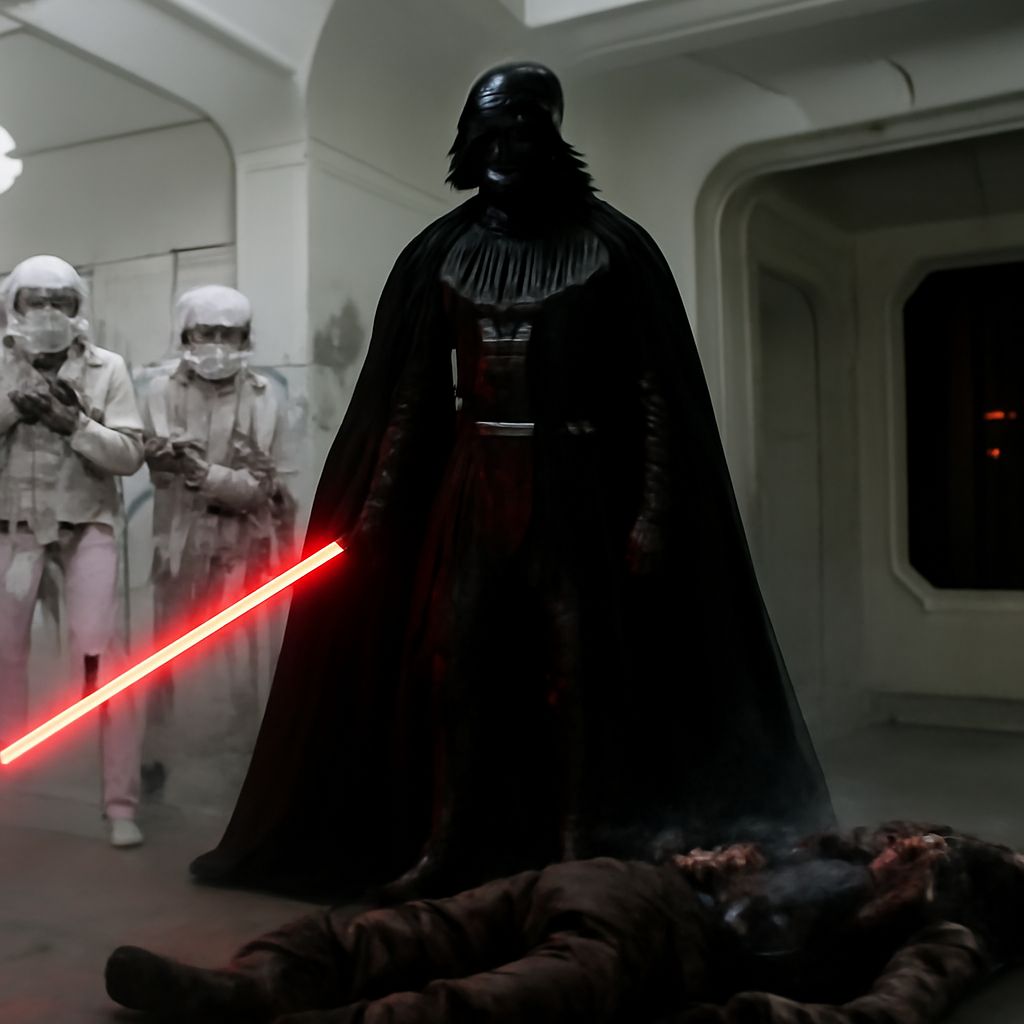
On Dagobah, Yoda raises Luke Skywalker’s sunken X-wing from a swamp with the Force. On Cloud City, Darth Vader uses that same mysterious power to hurl objects at Luke during a lightsaber duel. The scenes make a comparison between Yoda and Darth Vader tempting, but they show different characters facing very different challenges.
The films give viewers no direct duel between the Jedi Master and the Sith Lord. A contest between Vader and Yoda is therefore a thought experiment, built from their separate screen appearances rather than an official result. The answer changes with the period, the setting, and what counts as victory.
Darth Vader vs Yoda: What the Films Establish
In Revenge of the Sith, Yoda confronts Emperor Palpatine in the Senate chamber while Obi-Wan Kenobi fights Anakin Skywalker on Mustafar. Anakin has already received the name Darth Vader, but he has not yet suffered the injuries that lead to his black armor. The crosscutting joins the two battles thematically; it does not put Yoda and Vader in combat with each other.
Yoda’s fight with Palpatine shows him moving quickly with a lightsaber and countering powerful Force attacks. Senate pods become weapons in an arena built on an enormous scale. Yoda eventually falls and retreats; he does not defeat the Emperor. The sequence shows formidable ability under pressure as well as the danger of fighting in an exposed, vertical space.
For a Yoda vs Darth Vader comparison, it matters that the Mustafar duel shows an earlier Vader. Obi-Wan defeats him after Anakin attempts a reckless leap from a disadvantageous position. Later, the armored Vader fights differently on screen, using a slower, imposing presence and strong control of space. Treating both periods as interchangeable would erase a major change in his body and fighting style.
Yoda’s Speed and Control
In Attack of the Clones, Yoda confronts Count Dooku after Dooku has incapacitated Obi-Wan and Anakin. Yoda answers attacks with the Force and then fights with a lightsaber, moving in rapid leaps around his taller opponent. Dooku escapes when he threatens the injured Jedi with a falling structure and Yoda turns to save them.
The scene gives the Jedi Master a clear advantage to consider: mobility can make his small frame difficult to track. Against Darth Vader, Yoda would bring that same mobility to a fight against a much taller opponent. The scene also shows a priority beyond defeating an enemy. His decision to protect others changes the immediate outcome, a detail that matters if a hypothetical fight includes bystanders or vulnerable allies.
On Dagobah in The Empire Strikes Back, lifting the X-wing demonstrates a different kind of control. Yoda acts without a lightsaber, concentrating on an object far larger than himself. The scene establishes remarkable ability, though a stationary rescue exercise does not measure how quickly he could overcome a resisting opponent. In a Yoda vs Vader scenario with room to move and no one else to protect, his agility and composure provide strong reasons to favor him.
Vader’s Pressure and Reach
Vader’s first duel with Luke in The Empire Strikes Back unfolds through a series of changing spaces in Cloud City. He controls the pace, drives Luke backward, and sends machinery and debris flying. Luke is still a learner and loses the encounter, so the fight cannot establish exactly how Vader would fare against a Jedi Master. It does show how he combines a blade, the Force, and the environment to pressure an opponent.
His physical reach and deliberate attacks would be significant in a confined passage. In a narrow passage, Vader could limit Yoda’s room to change direction and force the engagement into close quarters. That inference from their screen fighting styles does not make a corridor an automatic victory.
In Return of the Jedi, Luke eventually overwhelms Vader after Vader threatens his sister. The Sith Lord loses his hand; then, when the Emperor attacks Luke, he turns against his master. The scene gives Vader a defeat and a moral choice in the same sequence. For any comparison of Vader against Yoda, it is a reminder that emotion, purpose, and relationships can change a confrontation as much as technique.
Which Version and Which Goal?
A Yoda vs Darth Vader matchup during Revenge of the Sith would involve the agile Jedi Master and the newly named Vader before the Mustafar injuries. Anakin’s skill and aggression make him dangerous, but his overconfidence against Obi-Wan suggests a possible opening for an experienced opponent. Yoda’s discipline and mobility give him the stronger case in an open arena, although the films never test that pairing.
Against the armored Sith Lord years later, the trade-off changes. Vader’s calculated pressure and use of surrounding objects make a tight industrial setting attractive to him. Yoda still has impressive Force control and combat experience, but his age and condition also matter: the ailing teacher seen near the end of Return of the Jedi is not the combatant shown in the Senate duel.
Even the aim alters the calculation. If victory means escaping with another person, Yoda might sacrifice an attacking opportunity against Vader to protect that person, as he did against Dooku. If Vader must capture Yoda rather than kill him, his choices may differ from a fight to the finish. A Darth Vader vs Yoda judgment should name those conditions before declaring a winner.
In an open space with both at their prequel-era fighting strength, Yoda’s mobility and calm make him the more persuasive choice. In a confined industrial setting against the later armored Vader, the Sith Lord’s reach and environmental attacks give him a stronger route to victory. Each outcome remains a reading of the evidence, not a duel the films have settled.