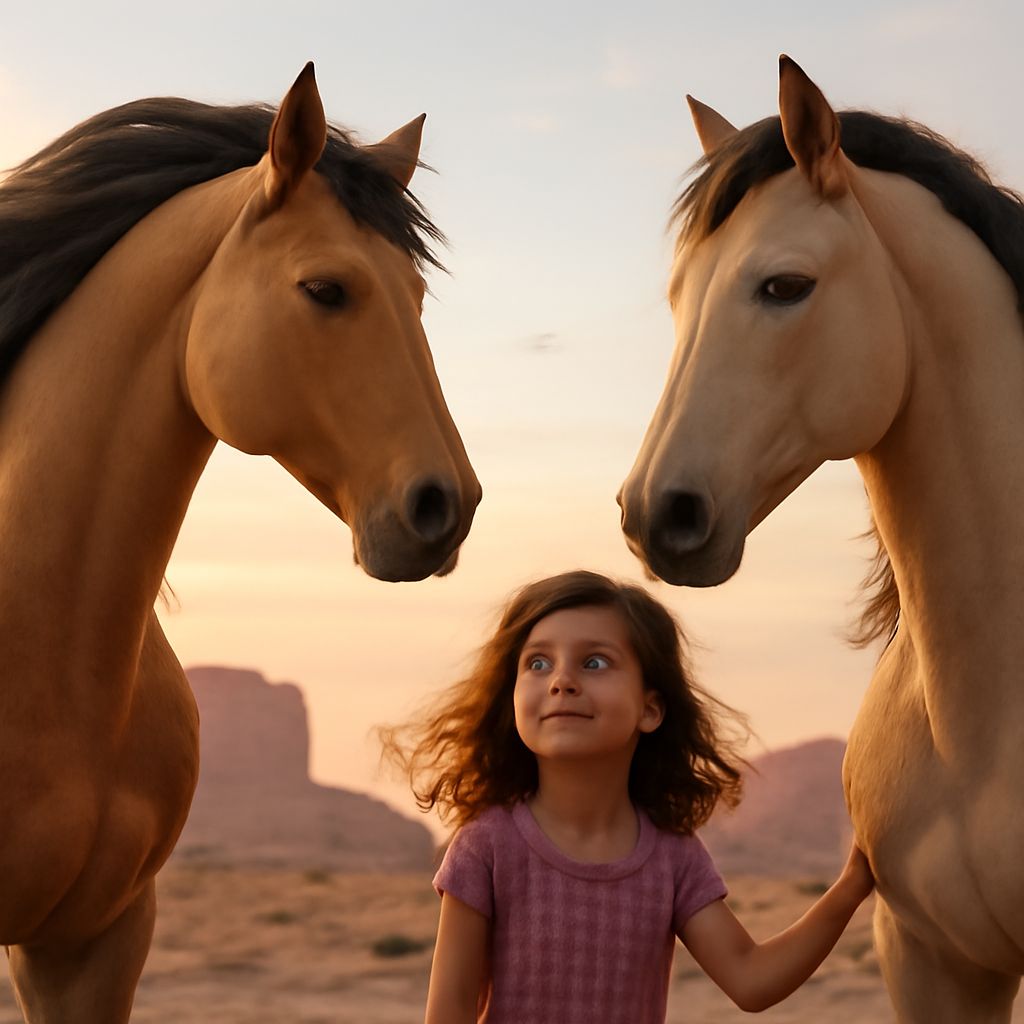
What makes a horse the center of a film without making him talk like a person? In Spirit: Stallion of the Cimarron (2002), a mustang’s movement, choices, and inner narration carry the story. This animated film about a horse gives its hero a human voice in reflection while letting his body speak in the action. The original Cimarron tale follows Spirit from a free-roaming herd into encounters with soldiers and a young Lakota man, Little Creek.
The Cimarron and the view from the herd
The opening grants the landscape space before turning it into a place Spirit knows. The camera glides across mountains and grassland, then joins the mustangs as they run. Their movement establishes a collective life: the herd changes direction together, and Spirit belongs to it. Wide vistas make freedom visible as room to move, while closer views reveal a particular animal within that landscape.
When Spirit encounters humans, the change in scale matters. Enclosures and ropes divide the open space introduced earlier. The audience can see the difference between crossing a plain by choice and being made to stand still. This animated horse movie treats the struggle for freedom as a physical problem before it becomes an abstract theme.
His curiosity also drives the plot. Approaching a human camp draws him into danger, and his resistance brings him into conflict with a cavalry colonel. The horse cartoon movie does not require Spirit to win an argument in dialogue; the audience understands his refusal through the way he plants his feet, pulls against a rope, and tries again. His determination has a visible cost, which gives the adventure its tension.
A voice inside, silence outside
Matt Damon voices Spirit’s narration, but the horses do not hold spoken conversations with one another. That distinction lets viewers hear a character’s account of events without asking the other characters to hear it too. DreamWorks identifies Damon as Spirit and describes the mustang’s journey to regain his freedom. The narration provides a guide to his perspective; his ears, eyes, posture, and pace supply the immediate drama.
That division is especially useful when Little Creek attempts to gain Spirit’s trust. Neither can simply explain his intentions to the other. The scene asks viewers to read distance, gesture, and response: a human approaches, a horse reacts, and the terms of their relationship slowly change. This cartoon about a horse makes communication an action the characters must negotiate.
Rain, the mare Spirit meets through Little Creek, adds another point of contrast. She moves in a world shared with people, while Spirit resists being claimed. Their attraction gives this animated horse story a reason to linger on the difference between their circumstances. It also gives Spirit something to consider beyond escape, without turning either horse into a miniature human.
Motion, music, and emotion
The film’s drawn characters have expressive faces, yet their weight and momentum remain central to the action. In the animated mustang film, a gallop is not just a pleasant image: the rhythm of hooves, the angle of a body, and the distance ahead tell the viewer whether running means play, pursuit, or escape. This Cimarron film repeatedly returns to that rhythm, so a sudden halt can feel as consequential as a chase.
Music expands the physical language of this 2002 Cimarron adventure. DreamWorks credits Bryan Adams with original songs, while the American Film Institute credits Hans Zimmer for the music. The songs give Spirit’s experience an emotional vocabulary that reaches beyond his spoken narration. The score can work underneath a sequence, gathering urgency or opening out with the landscape, while the animation remains free to show rather than explain.
The horse-centered cartoon takes an approach that is broad and sometimes openly sentimental. A song can tell the audience what a sequence means as clearly as the images do. Yet the combination has force when the music stretches a moment of motion across a vast setting: the viewer experiences a horse’s immediate effort and the larger longing attached to it at once. As an animated horse movie, the film asks music to do some of the expressive work that dialogue would ordinarily carry.
Spirit’s Cimarron story is also selective about its human figures. The colonel embodies the effort to subdue Spirit, while Little Creek’s encounters allow for a different relationship. These figures help shape the stallion’s experience, though the film remains focused on his choices rather than offering a detailed history of every community it depicts. The horse’s point of view gives the story its clarity and its limits.
Which Spirit story is which?
The original Cimarron feature belongs to a larger franchise, but the later entries offer a different center of attention. The series Spirit Riding Free follows Lucky and her friends as well as a horse named Spirit. In the 2021 film Spirit Untamed, Lucky meets a wild mustang and joins friends on a rescue adventure. It is a later feature, not another title for the 2002 release.
The distinction also changes how a viewer experiences the horse. The earlier animated equine story stays close to its stallion’s perception, even when people influence his fate. The later film gives Lucky’s discovery of friendship and belonging a central place. This animated film about a mustang and its successor both include a horse named Spirit, but their protagonists and visual presentations are distinct: the earlier feature uses drawn character animation, while the later film uses computer animation.
For a first viewing centered on the original stallion and his struggle to return to his herd, choose Spirit: Stallion of the Cimarron. For a story centered on Lucky and her friendship with a mustang, choose Spirit Untamed (2021).