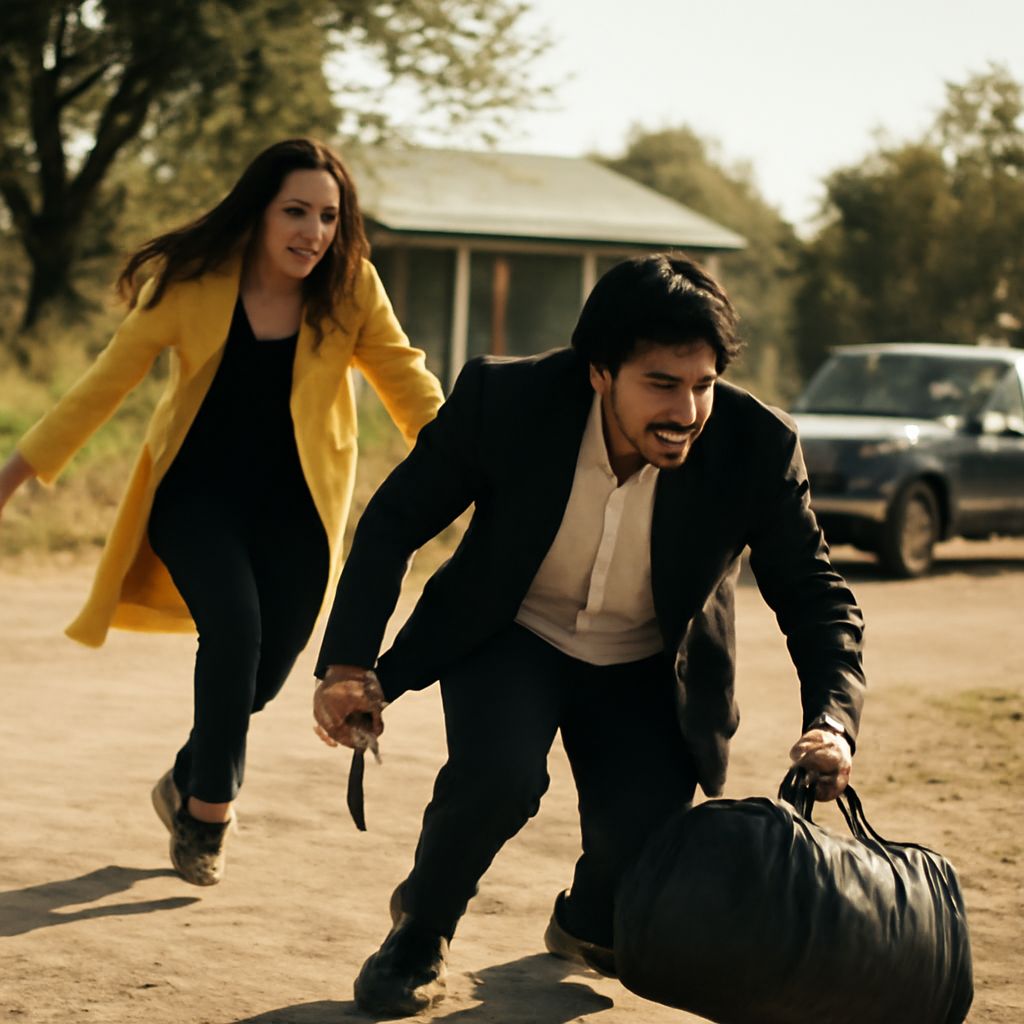
Which version of this getaway story is worth watching first? Sam Peckinpah’s 1972 thriller offers Steve McQueen and Ali MacGraw in a tense, stripped-down chase; Roger Donaldson’s 1994 remake gives Alec Baldwin and Kim Basinger the same dangerous partnership in a glossier, more explicit package. Both getaway movies follow a criminal couple after a robbery, but their stars and filmmaking give that familiar route different textures.
The Getaway movie from 1972: McQueen and MacGraw on the run
The Getaway movie directed by Peckinpah begins with Carter “Doc” McCoy in a Texas prison. Denied parole, he sends his wife Carol to Jack Beynon, a powerful, corrupt figure who can arrange his release. The price is a bank robbery using men Beynon selects. The job brings in the money, but a killing and a double-cross turn the escape into a race against both the law and other criminals.
McQueen plays Doc as a man who prefers to calculate before he speaks. His stillness makes the moments when that control breaks more revealing. MacGraw’s Carol is not simply waiting at the edge of the action: she helps make the robbery and the flight possible. Their reunion is charged with relief, dependence, and the uncomfortable cost of the deal that freed him.
The film places their marriage under pressure without stopping the chase to explain it. Doc depends on Carol, yet resents what she did to secure his release. That conflict can be difficult to watch: his anger includes physical violence toward her. The couple’s bond holds the plot together, but it is not presented as an uncomplicated model of loyalty.
Peckinpah’s sense of movement gives the 1972 getaway movie much of its force. Cars, trains, crowded streets, and a hotel become temporary obstacles or possible routes out. Quick cuts and bursts of violence interrupt stretches of planning and pursuit. Quincy Jones’s score adds another rhythm, sometimes setting a sleek surface against the mess of the couple’s choices.
The 1994 remake: a familiar route with sharper edges
The Getaway film directed by Donaldson recasts Doc and Carol with Baldwin and Basinger. Here Doc lands in a Mexican prison after an operation goes wrong. Carol negotiates with Jack Benyon, played by James Woods, and Doc’s release again leads to a robbery, betrayal, and flight. Michael Madsen plays Rudy, a dangerous accomplice whose pursuit keeps the couple looking over their shoulders.
The remake lets Baldwin’s Doc show strain more openly, while Basinger’s Carol brings a different energy to the couple’s arguments and moments of intimacy. Their exchanges make the relationship a visible part of the action, not merely a reason to keep moving. The story still depends on a criminal bargain that damages trust between them.
Donaldson’s 1994 version is more polished in its presentation and more explicit about sex and violence. It offers a 1990s star pairing and an R rating, compared with the 1972 film’s PG rating. Ratings alone do not measure how unsettling a film feels, but the distinction helps a viewer know which treatment to expect.
This later getaway movie does not reinvent the central chase. Its interest lies partly in seeing how a new cast and filmmaking style handle a story already built around tight deadlines and unreliable allies. Woods gives the corrupt dealmaker a smooth menace, while Madsen’s Rudy is an immediate physical threat. The dangers have different faces, but both come from a world in which partnership can be withdrawn without warning.
From Jim Thompson’s novel to the screen
Both films trace their story to Jim Thompson’s novel The Getaway, with Walter Hill writing the 1972 screenplay and sharing screenplay credit on the remake with Amy Jones. The source is darker and stranger than a straightforward account of a robbery and flight. It gives the couple’s damaged relationship and the consequences of criminal life a particularly bleak shape.
One adaptation choice makes the difference clear. Thompson’s novel takes Doc and Carol toward El Rey, an imagined refuge for criminals that becomes a nightmare rather than simple freedom. The films leave out that surreal ending and make the pursuit and the possibility of escape their central dramatic engine. Viewers interested in this escape story across page and screen can compare not just events, but the feeling each ending leaves behind.
That change also shifts the audience’s relationship with Doc. A movie can put a charismatic star at the center of the action and invite viewers to follow his skill under pressure, even while the character behaves cruelly. Thompson’s novel gives less room to enjoy the prospect of escape as a clean victory. Neither approach makes the couple innocent; each directs attention to different consequences.
What the comparison reveals
The two versions share a sturdy structure: release, robbery, betrayal, and a journey toward the border. Within that structure, a small change in performance matters. McQueen’s restraint makes Doc’s eruptions stand out against a controlled exterior; Baldwin’s more openly pressured presence gives the remake a different pulse. Carol’s responses are just as important, because the couple cannot survive by treating trust as an abstract virtue.
The 1972 version’s physical locations and abrupt shifts into violence give its journey a rough immediacy. The 1994 film presents comparable dangers with a more contemporary polish and a stronger emphasis on explicit material. Watching both shows how casting, pacing, and tone can change the experience even when the destination remains familiar.
Choose the earlier film for McQueen and Peckinpah’s leaner chase; choose the remake for Baldwin, Basinger, and a more explicit 1990s treatment.