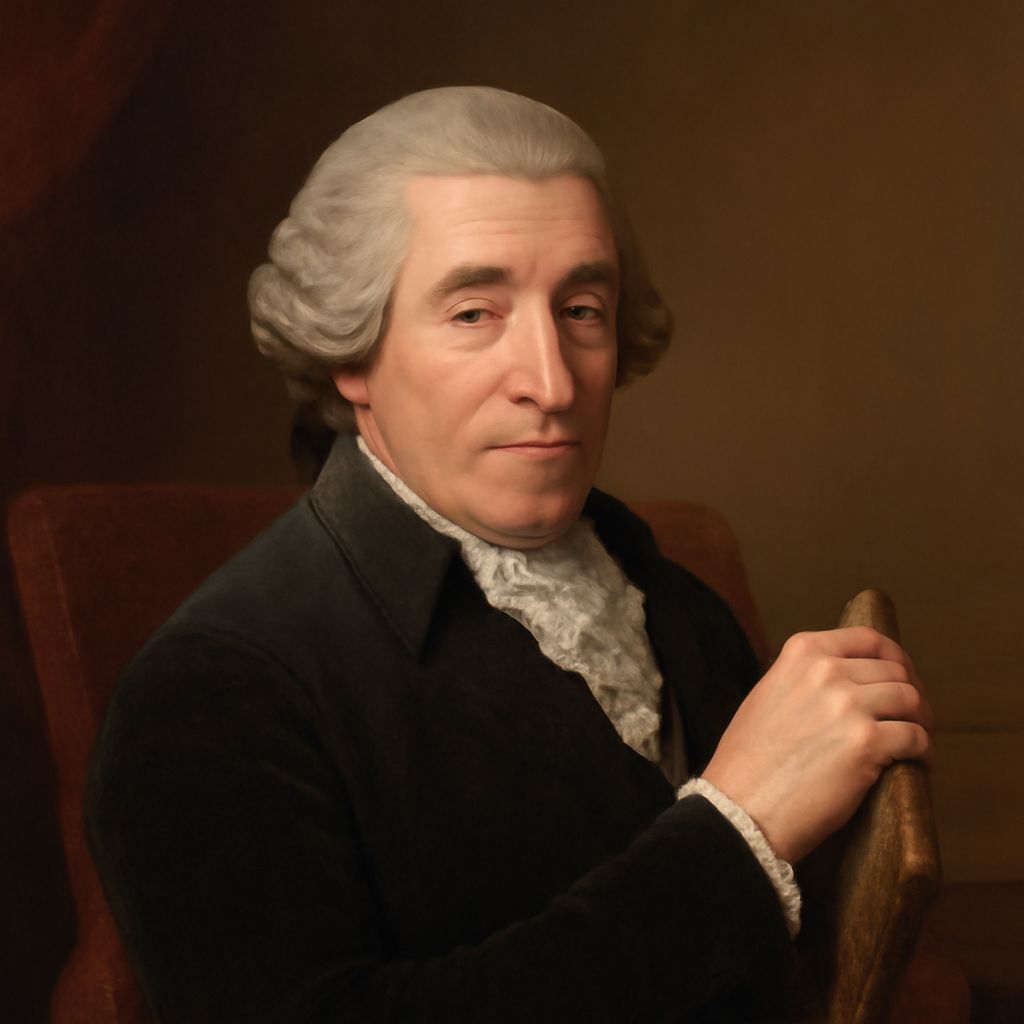
Franz Joseph Haydn, a prominent figure in classical music, is often hailed as the “Father of the Symphony” and the “Father of the String Quartet.” His innovative compositions and techniques have left a lasting impact on the music world. Haydn’s influence extends beyond his own works, significantly shaping the styles and compositions of future generations of musicians, notably Ludwig van Beethoven and Niccolò Paganini.
Haydn’s Musical Legacy
Franz Joseph Haydn’s contributions to music are monumental. His mastery in developing the symphonic form and string quartet structure set the foundation for classical music as we know it today. Over his lifetime, Haydn composed 104 symphonies, numerous string quartets, operas, and other chamber music, each reflecting his inventive use of musical forms and expressions.
Haydn’s approach to composition was both methodical and adventurous, allowing him to explore new musical territories while maintaining a coherent structure. His ability to balance melody, harmony, and rhythm was a hallmark of his style. This balance not only defined his works but also influenced the compositions of his contemporaries and successors.
Haydn’s Impact on Beethoven
The relationship between Franz Joseph Haydn and Ludwig van Beethoven is a fascinating chapter in music history. Haydn served as a mentor to the young Beethoven, who came to study with him in Vienna in the early 1790s. Although their relationship was complex and sometimes strained, Haydn’s guidance helped shape Beethoven’s early compositional style.
Beethoven’s early works show clear traces of Haydn’s influence, particularly in the symphonic and chamber music forms. Haydn’s mentorship allowed Beethoven to develop his skills in fugal writing and thematic development. The impact is especially evident in Beethoven’s first two symphonies, where one can discern the structural clarity and thematic coherence characteristic of Haydn’s work.
However, as Beethoven matured as a composer, he began to break away from Haydn’s traditional forms, pushing toward more dramatic and emotional expressions that would come to define his later works. Despite this evolution, Haydn’s foundational influence remained integral to Beethoven’s understanding of musical form.
Paganini and the Haydn Connection
While Niccolò Paganini may not have directly studied under Franz Joseph Haydn, the composer’s influence on Paganini’s musical development is undeniably significant. Paganini, known for his virtuosic violin performances and compositions, was part of a generation of musicians who benefited from the musical structures and innovations introduced by Haydn.
Haydn’s work in expanding the expressive capabilities of string instruments laid the groundwork for Paganini’s technical prowess. Haydn’s string quartets, with their intricate interplay and diverse textures, can be seen as a precursor to the complex and challenging compositions that Paganini became famous for.
Moreover, the classical forms that Haydn perfected provided a framework within which Paganini and his contemporaries could experiment and innovate. This blend of classical foundations and innovative techniques is a testament to Haydn’s enduring legacy in the musical world.
In conclusion, Franz Joseph Haydn’s contributions to music were not only groundbreaking in his time but also served as a cornerstone for future generations of composers and musicians. His influence on figures such as Beethoven and Paganini highlights the profound effect Haydn had on shaping the evolution of classical music.