What is cinematography? It is the craft of creating a film’s moving images through camera placement, lens choice, lighting, composition, color, exposure, and movement. The cinematographer, or director of photography, shapes how viewers see a story and what they feel about its characters, spaces, and events.
Cinema photography is closely related to still photography, but it works across time. A photograph fixes one instant; cinematography designs a sequence of images whose framing, light, and motion develop as the scene unfolds. It is also different from directing: the director oversees the film’s broader dramatic approach, including performances, staging, pacing, and collaboration across departments, while the cinematographer leads the visual capture of that approach.
What Is Cinematography? The Craft Behind a Film’s Look
Cinematography begins before a camera rolls. The director and cinematographer discuss the film’s visual language, then decide how technical choices can support the story. They may select cameras, lenses, film stock or digital settings, aspect ratios, filters, and lighting methods. They also plan where the camera will stand, how it will move, and how the visual design will change between locations or emotional beats.
The cinematographer usually heads the camera and lighting departments. A camera operator may physically execute a planned shot, while a gaffer leads the lighting crew. The director of photography coordinates these teams and makes key image-making decisions, but does not work in isolation. Production design, costume, makeup, locations, and color grading also affect the final appearance. A useful analysis credits each department accurately rather than treating every visible detail as the cinematographer’s work.
For example, a cinematographer can light a room so that a character disappears into shadow, but the set design determines the room’s architecture and objects. The director may decide that the character should appear isolated, while the editor determines when the shot cuts away. Cinematography turns those dramatic intentions into a visual experience without being identical to the whole filmmaking process.
How Camera Angle, Light, Composition, and Movement Shape Meaning
A camera angle is not merely a technical position. It changes the relationship between the viewer and the subject. A high angle can make a person seem exposed or diminished; a low angle can suggest power, menace, or instability. Eye-level framing often feels neutral, but it can become unsettling when the surrounding action is not.
- Composition: Centering a character can make them feel controlled, important, or trapped. Placing them at the edge of the frame can emphasize distance or exclusion. Negative space may suggest loneliness, danger, or an unseen presence.
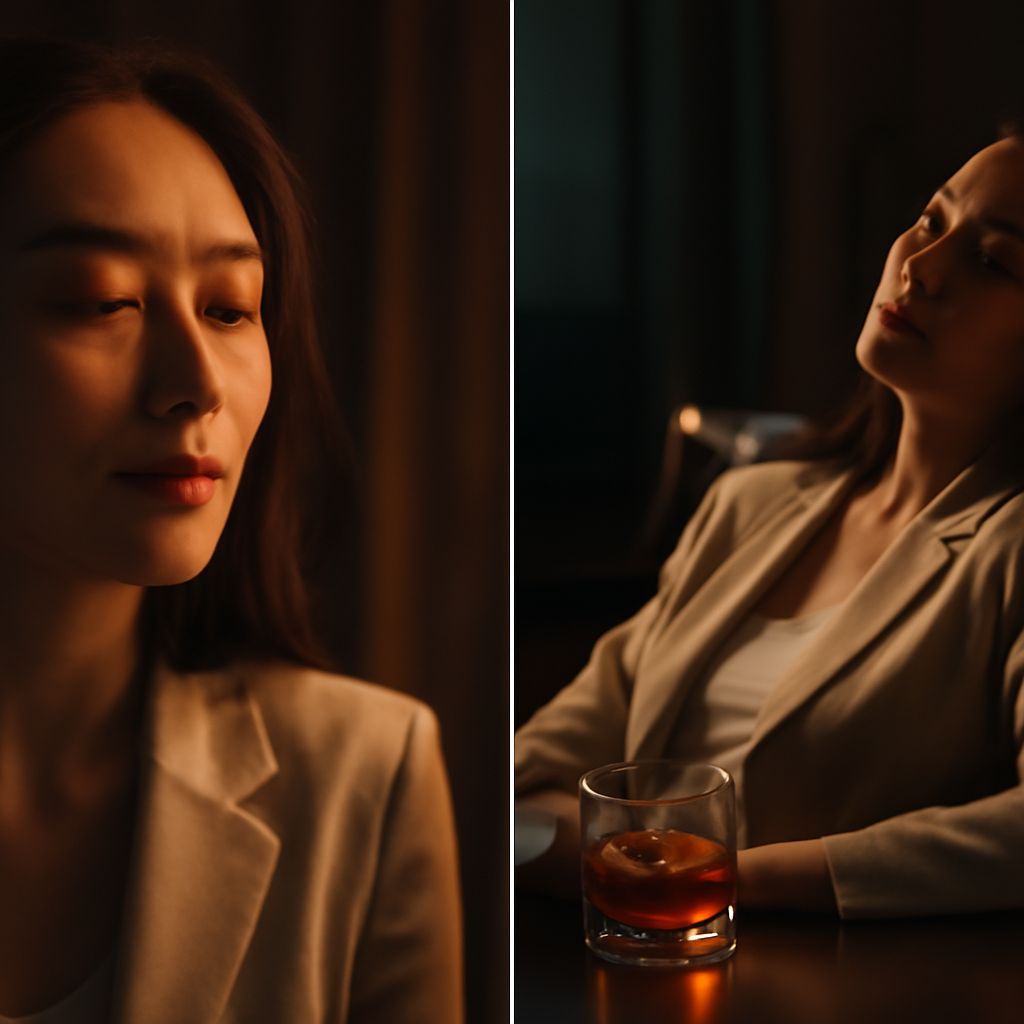
- Lighting: Hard light creates defined shadows and visual tension, while soft light can feel gentle or open. Backlighting may conceal identity, separate a figure from the background, or create a sense of mystery. Color temperature also affects mood: cool light can feel detached, while warm light may suggest intimacy or memory.
- Lens and depth: A wide lens can exaggerate space and make nearby movement feel forceful. A long lens compresses distances and can isolate a subject against a less distinct background. Shallow focus directs attention to one plane; deep focus lets viewers explore several parts of the frame.
- Movement: A locked-off camera can make an event feel formal, observed, or inescapable. A handheld camera may create urgency or instability. A smooth tracking shot can reveal connections between people or guide attention through a space.
These choices work together. A low camera angle does not automatically make a character powerful if harsh lighting, cramped composition, or nervous movement contradicts that impression. The meaning comes from the combination and from the scene’s context. Camera choices can also change during a film: stable, balanced framing may give way to fragmented handheld images as a character loses control.
David Fincher cinematography: Controlled Tension in Se7en and Zodiac
David Fincher cinematography is often recognized for precise framing, subdued color, controlled camera movement, and an atmosphere of psychological pressure. These qualities are collaborative achievements rather than the work of the director alone. Se7en was photographed by Darius Khondji, while Zodiac was photographed by Harris Savides, and both cinematographers helped translate Fincher’s approach into distinct visual systems.
Se7en uses low-key lighting, wet streets, dense shadows, and a grim, desaturated palette to make the city feel oppressive. The camera frequently observes characters within cluttered or constricted spaces, limiting visual relief. Rain, darkness, and practical light sources contribute to the film’s world, but the cinematographer’s control of exposure, contrast, and framing determines how those elements register on screen. The result is tension that persists even when the camera moves little.
Zodiac is more restrained and patient. Its clean compositions and measured movements support an investigation that unfolds over years rather than through constant bursts of action. Repeated locations and carefully controlled lighting create continuity as the characters age and the case expands. Fincher’s visual language is therefore not simply “dark”; it uses restraint, repetition, and spatial precision to make uncertainty feel methodical and inescapable.
Wes Anderson cinematography offers a striking contrast. Working frequently with cinematographer Robert Yeoman, Anderson favors centered and symmetrical compositions, frontal staging, wide-angle views, deliberate lateral tracking shots, overhead inserts, and carefully controlled color palettes. The formal precision can make a world feel playful and storybook-like, while sudden emotional details inside that order create pathos. In The Grand Budapest Hotel and Moonrise Kingdom, production design, costume, performance, and cinematography are tightly coordinated; their visual richness cannot be assigned to the camera department alone.
What Makes the Best Cinematography Stand Out?
There is no single formula for the best cinematography. Outstanding work makes visual choices that serve the film’s subject, genre, and emotional movement. It may be spectacular, as in the desert vistas of Lawrence of Arabia, or intimate, as in the shifting color and close framing of In the Mood for Love. What matters is that the images feel purposeful rather than decorative.
- 1917: Roger Deakins uses extended moving shots, carefully hidden transitions, and changing light to create immersion and urgency.
- Roma: Alfonso Cuarón and cinematographer Emmanuel Lubezki use wide compositions, deep focus, and graceful movement to connect private experience with social upheaval.
- Moonlight: James Laxton’s saturated color, intimate close-ups, and fluid camera movement express shifting identity and vulnerability.
- Blade Runner 2049: Roger Deakins contrasts monumental spaces, sculpted light, and controlled color to make isolation feel both physical and philosophical.
Strong cinematography remains legible even when viewers do not consciously identify every technique. It guides attention, establishes a world, controls emotional distance, and gives each scene a visual rhythm. Its success is measured not by how visibly “stylish” a film looks, but by how precisely its images communicate what the story cannot express through dialogue alone.